
Mrs Gandhi's power ebbed and peaked with the times. Mr Modi's has almost been constant, barring the few months of hard dip after the 240 seats of 2024, points out Shekhar Gupta.
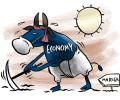
'A proposal to do away with labour laws is not feasible.' 'That's why we wanted to have a dialogue with the states.'

Kannappa is a bloated mess of a film that underutilises interesting story ideas, observes Arjun Menon.

The government has introduced the Code on Wages Bill 2019 and the Occupational Safety, Health and Working Conditions Code Bill 2019 in Lok Sabha on July 23.

The police arrested six persons including a hacker named Parit Dhamelia from Surat and owner of a YouTube channel Prajwal Taily, a resident of Latur, Maharashtra.

The foreign degree no longer sells itself, families are doing the math, and for many, the numbers just don't add up.

Gangster Suresh Pujari and 11 others have been acquitted in a 2016 builder extortion bid case by a MCOCA court in Thane, India. The court cited the prosecution's failure to present sufficient evidence and carry out a comprehensive investigation. The accused were charged with attempted murder, extortion, criminal conspiracy, and related offenses. The court ruled that the trial against two absconding accused, Ravindra Ghare and Iqlakh Shaikh, would be discontinued due to the acquittal of the other individuals.
As the Centre faces multiple hurdles, BJP-governed states such as Rajasthan, Madhya Pradesh and Gujarat have swiftly moved in to usher in radical reforms as they aim to take a larger share of the FDI pie.

The Indian economy needs to generate an average of nearly 78.5 lakh jobs annually until 2030 in the non-farm sector to cater to the rising workforce, according to the Economic Survey for 2023-24. The Survey tabled in Parliament on Monday also laid emphasis on the private sector's role to create employment in the country saying "In more than one respect, the action lies with the private sector. "In terms of financial performance, the corporate sector has never had it so good."
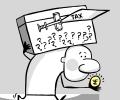
The Union government is projected to share about 32 per cent of central taxes with states during the financial year 2024-25 against the 15th Finance Commission's recommendation of 41 per cent. The Revised Estimates (RE) for FY24, too, show a similar share of states in the central taxes at 32 per cent. In absolute terms, however, there has been an increase in the amount devolved to states compared to the Budget Estimates (BE) for FY24 at Rs 11 trillion.

Fine furniture is now about soul, not just status, whether it's a bar cabinet with elaborate French marquetry or a delicately curved Italian leather sofa.

The norms, say industry experts, are not sufficient to weed out fly-by-night contractors.

The tone of the film may be gloomy but it is never tragic or hopeless. Like millions of underprivileged people who find joy in small things, Shanu, Bua and their mother keep their heads above water, notes Deepa Gahlot.
If the concerns over risking political capital are overcome, the long-term gains for the Indian economy will be immense, asserts A K Bhattacharya.

Banerjee claimed that some people will try to "engineer riots" during elections and urged everyone "not to fall prey to the plot".

India's policy for agriculture trade must move commodity-by-commodity to gain maximum benefits as US President Donald Trump's 26 per cent tariff on exports from the country take effect, said agriculture economist Ashok Gulati in a recent policy paper.

A bench of Chief Justice Satish Chandra Sharma and Justice Sachin Datta granted four weeks to the Delhi government counsel to file a further status report in the matter and listed it for hearing on May 4.
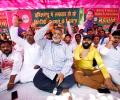
Unless controlled and contained, given the untested belief that the north Indian labour support and follow the Hindutva kind of political ideology, there is a potential in terms of ideological clashes with their Dravidian brethren in the local neighbourhoods, and it all escalating into violence, especially during election time, predicts N Sathiya Moorthy.
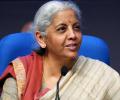
'If the BJP detoxifies the nuclear liability law, it will bring economic, environmental and, most of all, strategic benefits.' 'Let's keep our fingers crossed and hope that this Budget promise is met soon -- ideally, before Mr Modi heads to his first meeting with Trump 2.0,' observes Shekhar Gupta.
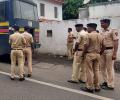
The accused, Babu Gudgiram Kale, was apprehended on Sunday near Mulund suburb in neighbouring Mumbai, where he had been working as a labourer and selling flowers for livelihood, he said.

India Inc on Thursday pitched for lowering income tax burden on common man, increase in capital expenditure, and firm steps to contain food inflation in their nearly two-hour long interaction with finance minister Nirmala Shitharaman ahead of the Union Budget. During pre-Budget consultation with Sitharaman, the industry leaders and associations also urged the government to focus more on infrastructure development with a view to maintaining the economic growth momentum. The industry leaders also laid stress on boosting the MSME (micro, small, and medium enterprises) sector, considered a backbone of the Indian economy and main employment generator.

President Droupadi Murmu, in her address to the nation on Republic Day, advocated for the "One Nation One Election" initiative, emphasizing its potential to enhance governance and reduce financial burdens. She highlighted the government's efforts to eliminate remnants of colonialism, citing the replacement of British-era criminal laws with modern alternatives. Murmu also lauded India's economic progress, stressing the importance of inclusive growth and social welfare. She urged citizens to remember the sacrifices of freedom fighters and reaffirmed the significance of the Constitution in guiding India's journey towards a prosperous and equitable future.

If you have seen Zwigato, Param Kumar's story will sound familiar. Laid off from his job as a repairman at a Gurugram-based water purifier provider, he now delivers groceries and food for a mobile-based delivery app, in Delhi. Kumar, who started making deliveries last August, told Business Standard that he is working longer hours than his older salaried job as an RO repairman, and has no paid leaves or health insurance. Kumar is part of India's estimated 7.7 million-strong force of gig workers.
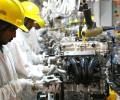
Single registration will be coupled with single licence, along with a single return, for executing projects for five years.
A group comprising top tech startups and unicorns has raised several "serious concerns" over a platform-based gig workers Bill proposed by the Karnataka government, saying it would hurt the ease of doing business. They told the state government the Bill in its current form would hamper operations and increase regulatory and compliance burden on the nascent gig and startup economy, according to sources.
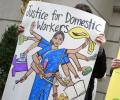
The Supreme Court of India directed the government to establish a legal framework to protect domestic workers and address their exploitation.

As the pandemic pushed employers to explore and adapt new ways to stay in the business, a survey has revealed that 6 out of 10 organisations have adopted 'work from home' policy post Covid-19 relaxations. Over 65 per cent of the employers have either introduced 'work from home' as a policy or are evaluating the same reflecting a maturity and the confidence in their employees, according to a survey by Grant Thornton Bharat. The survey was conducted online by Grant Thornton Bharat among 4,650 respondents across social media platforms.
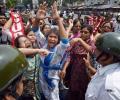
None of the issues which have been continuously raised by the central trade unions, including unemployment, minimum wages, social security and 14-point charter of demands, were addressed by the minister.

Engineers based in India are estimated to be writing roughly 35 per cent of the 100 million lines of codes required to develop one fully driverless car for global vehicle makers.
After assuming power in 2014 with a full majority of its own, the BJP-led NDA government started an ambitious process of reforming labour laws in the form of codes aimed at making the framework less cumbersome with a variety of alterations. It had planned four codes each for industrial relations, wages, social security and welfare, and occupational safety, health and working conditions. To this end, 35 central labour laws were to be converted into four codes that would have had the virtue of streamlining labour relations. But none of the proposed code Bills could be converted into a law principally because neither trade unions nor industry representatives came on board. They hold the key to India's low-growth-high unemployment paradigm but the government may struggle to push them through this time as well. Somesh Jha explains why

Technology is rapidly reshaping industries that have long been rooted in tradition, driving a wave of innovation that is transforming everything from finance, banking, steel to manufacturing.

The government has decided that there has to be a floor minimum wage for the workers.

BMS general secretary Virjesh Upadhyay said, "There are many anomalies in the draft rules on Code on Wages which need to be amended. The new rules are silent about many provisions clearly provided in the four Acts subsumed in the code."

'The BJP's numbers in this government are almost the same as those enjoyed by the Congress under P V Narasimha Rao when the reform process was kicked off in 1991.' 'As before, the only constraints on the prime minister's actions are internal, not external.' 'They come from his own assessment of the political consequences of any action,' points out Mihir S Sharma.
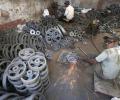
Instead of mechanically consolidating all labour laws into one, provisions of all labour laws should be relooked in terms of their substance. The irrelevant and archaic provisions have to be fixed, says Aparajita Gupta.

According to draft Code on Social Security, 2019, gig and platform workers will be entitled to life and disability cover, health and maternity benefits, among others.

By June 2025, financial freedom will be just an ATM away. Pleasantly surprised? But there's more, says Ramalingam Kalirajan
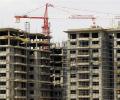
Justices Arif S Doctor and Somasekhar Sundaresan held there was nothing in the MCC that would interfere with the Board's ongoing activities.

The incident took place around 8.30 am at the under-construction site of Amrapali Dream Valley Society, the police said, adding that the long-stalled project is being completed by the state-run NBCC.

No government in the past initiated the process of policy making for its next tenure even before going in for elections. Once the Model Code of Conduct is enforced by the Election Commission, should the government of the day refrain from taking an active interest in policy making for the next five years and let that be the function of the new government?, asks A K Bhattacharya.
